
How Somatic Experiencing Helps Panic Attacks and Anxiety

Panic is rarely as logical or straightforward as we wish it were.
Maybe it starts with your chest tightening, a flutter or sinking feeling in your stomach, or your heart beating faster without a clear reason. You tell yourself you are not afraid, yet your body reacts as though something is wrong. Other times, what you are panicked about feels very real, even overwhelming, as if it could be the end of the world or close to it. And sometimes the distress does not feel like fear at all. It feels like tension, unease, or that your body is doing its own thing without your permission.
For many people, panic and anxiety do not begin with thoughts. They begin in the body. You might notice shortness of breath, muscle tightness, dizziness, waves of heat or cold, or a sudden urge to escape.
When this happens, it is natural to start wondering what is going on inside your body.
What is happening to me?
Why does this feel so intense?
Why does my body keep doing this?
These questions are often the beginning of understanding how your nervous system has learned to respond to your life.
Who Am I and Why Am I Talking About This
Hi, I’m Amy Hagerstrom. I’m a licensed clinical social worker and a Somatic Experiencing® Practitioner.
I also know debilitating anxiety and overwhelming physical symptoms from my own life. There was a period in my life when I lived with debilitating anxiety and overwhelming physical symptoms that affected everything, including my self-esteem. This work did not come to me only through training. It came through my own body and my own life.
This is the work that helped me see that I was not defective for what I was experiencing. My brain and body were doing what they are designed to do. They were trying to protect me from what they perceived as danger. I spent a long time trying to think and talk my way out of my anxiety and suffering. That did not work.
For a long time, I felt the panic and intensity in my body but did not yet have a way to understand what was happening. My system was busy trying to survive it. Learning how my nervous system worked began to reduce the shame I carried about my anxiety and my reactions.
Somatic Experiencing helped my brain and body begin to recognize that much of what I had been perceiving as danger actually was not. That shift brought real relief. And the work itself went deeper.
Many of the people I work with have already done a lot to understand their anxiety. They've been to therapy, read the books, practiced breathing exercises, and gained insight into where their anxiety comes from. They're often frustrated that their body still reacts as though it's in danger. If that sounds familiar, you're not failing. It may simply mean your body needs something different than insight alone.
Why Somatic Experiencing Matters for Panic and Body-Based Anxiety
Panic affects your whole body. Your heart rate, breathing, muscle tension, digestion, temperature, and sense of safety all change as your nervous system responds to what it perceives is happening around you.
Somatic Experiencing® (SE) is a body-oriented approach to therapy and the foundation of my work. Rather than focusing only on your thoughts or trying to make sense of your anxiety intellectually, we also pay attention to what your body is communicating. We notice sensations, changes in your breathing, areas of tightness or heaviness, subtle impulses to move, and the moments when your body becomes more activated or begins to settle.
One of the goals of this work is to help your brain and body develop a stronger sense of safety. Sometimes your nervous system reacts as though you're in danger even when you logically know you aren't. That's because it responds to what it perceives, not simply to what's happening in the present moment. Through repeated experiences in therapy, your brain and body gradually begin to recognize the difference between situations that are truly dangerous and those that simply feel dangerous because of past experiences, chronic stress, or learned patterns of protection.
As that happens, many people notice that they can stay present with difficult sensations and emotions without becoming overwhelmed. Panic no longer has to take over. Instead of getting swept away by the fear, your nervous system begins to learn that it can move through activation and return to a steadier place.
Along the way, we often begin to understand more about what your anxiety is responding to. Sometimes it's connected to experiences from the past that your body is still carrying. Other times, it's shaped by ongoing stress, uncertainty, or a long-standing habit of preparing for the worst.
As your nervous system becomes steadier, you may find it easier to set boundaries, recover more quickly after stress, slow down when you need to, and make choices that better support your well-being. Those changes often grow naturally as your brain and body become more confident that you're safe enough to respond rather than simply react.
How Panic and Somatic Anxiety Develop
When a panic response gets triggered, your nervous system shifts into survival mode. This is the part of your system that runs automatically and is always scanning for danger.
For many people, panic and anxiety start as a surge of activation. Your heart races. Your chest tightens. Your breathing changes. Your thoughts speed up. Your body feels wired, restless, or on edge. It can feel like everything inside you is saying, Something is wrong. I need to get out of here.
But for a lot of people, especially when this has been happening for a long time, the nervous system does not stay there. It shifts into a state that feels like the gas and the brake are on at the same time.
You might feel panicky and frozen at once.
Anxious but numb.
Alert but exhausted.
Desperate to escape but unable to move forward.
If this pattern keeps going, the system can begin to lose energy altogether. You may feel depleted, foggy, unmotivated, or shut down. Even small things can start to feel overwhelming.
This also helps explain why panic can feel like it comes out of nowhere, or why it can get triggered by something you logically know is not a big deal. At this point, it does not take a real threat to set it off. A thought, a memory, a sensation, or even stillness can trigger the response. Your body is reacting to something your mind does not always have access to.
Why Thinking Your Way Out of Panic Rarely Works
Many people come into therapy having already done a lot of thinking about their anxiety. They understand where it comes from. They can explain their history. They know their patterns. Some are incredibly self-aware.
And yet their bodies still react.
They may find themselves suddenly panicked in the grocery store, unable to sleep at night, or overwhelmed by sensations that seem disconnected from what is happening in their lives. This can feel especially frustrating for people who are used to solving problems through insight and effort.
The nervous system does not change through insight alone.
It changes through experience.
When the body has learned to stay on high alert, it needs to experience safety in small, consistent, relational ways. This is where somatic work becomes essential.
What Can Change Over Time
One of the goals of this work is to help your brain and body develop a stronger sense of safety. When your nervous system no longer perceives danger where there isn't an actual threat, it no longer has to respond in the same way. For many people, that means panic attacks stop happening. While stress, anxiety, and difficult emotions remain part of being human, they no longer have to trigger the overwhelming alarm response that leads to panic.
These changes often extend beyond panic attacks. You may recover more quickly after stressful experiences, feel less afraid of the physical sensations that once seemed overwhelming, and find it easier to pause before reacting. Many people also notice that setting boundaries, making decisions, and staying present during difficult conversations begins to feel more natural.
As your brain and body become more confident that you're safe, panic no longer has to shape how you move through your life.
What Sessions Are Like
In sessions, we move slowly and with care.
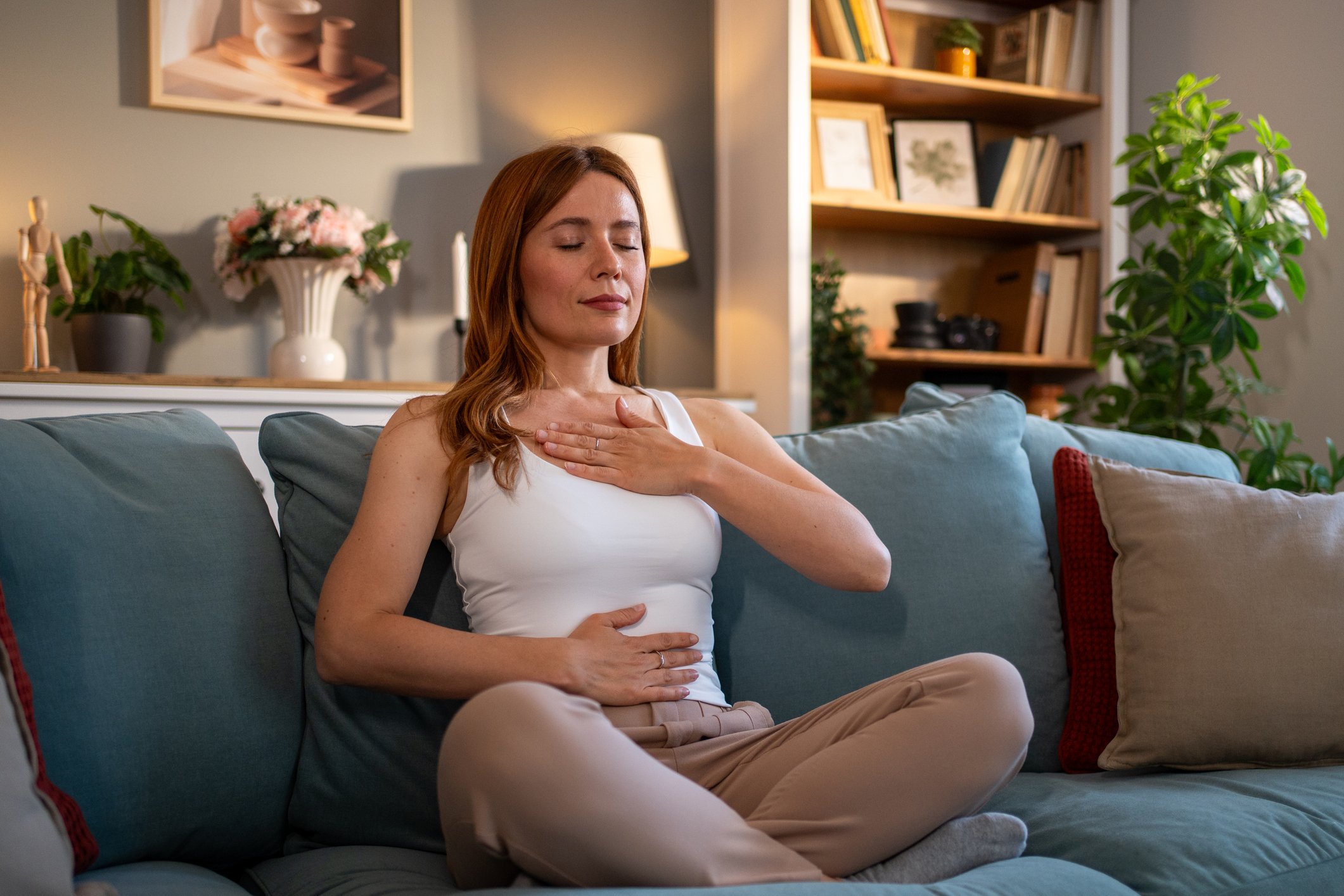
Some sessions have more talking. Some have less. There is space for all of you here: your thoughts, your emotions, and your body. With Somatic Experiencing, we bring the body into the work and pay attention to what it is communicating in the moment. Sometimes that means simply noticing what is there. Other times it means following what your system seems to need.
We stay focused on what is happening right now, in both your mind and your body. Sensations. Emotions. Images. Subtle shifts in breath. Moments when your system becomes more activated and moments when it begins to settle.
Sessions can look very different from one person to another and even from week to week. Some are more still. Some are more active. We may be sitting the whole time, or at times standing. You might gently hug a pillow or yourself, press your hands into the desk or the wall, squeeze your fists, or use a weighted blanket. All of this happens slowly and mindfully.
Sometimes we move between what feels more difficult, emotionally or physically, and what feels easier or more neutral. This back-and-forth is how the nervous system learns flexibility and trust. We stay tuned in to your system and adjust as we go.
With consistent support, it becomes possible for reactions to soften, for recovery to feel steadier, and for a deeper sense of presence to take root in your life.
Can Somatic Experiencing Help if Panic Is Triggered by “Small” Things?
Yes. Panic can get triggered by situations you logically know are not a big deal because the nervous system is responding to cues it learned long ago. This work helps you track those cues and gradually build a steadier sense of safety inside your body.
An Integrative Approach to Anxiety
Somatic Experiencing is the foundation of my work, and I also integrate other supports when they feel like a fit, including the Safe and Sound Protocol and the Rest and Restore Protocol.
I take an integrative approach to this work. That means we also pay attention to things like sleep, movement, nourishment, light exposure, stress, and daily rhythms, because these all affect anxiety, and anxiety affects them in return. They matter.
A Different Relationship with Panic
This work can change your relationship with panic. Sensations start to make more sense. The fear that builds around the sensations can soften. Your body can begin to feel like a place you can live in, rather than something you have to manage.
As your system becomes steadier, it becomes easier to stay present with emotions, make decisions with more clarity, and take action in ways that match what you value. Self-trust and self-esteem often begin to rebuild from there.
This is steady, nervous-system-based work. It creates change you can feel in real life.
Continue Exploring
If you'd like to learn more about Somatic Experiencing, visit my Somatic Experiencing page to learn how this approach works and what sessions are like. You can also explore my homepage to learn more about my approach to therapy, the services I offer, and additional articles about trauma, anxiety, and nervous system health.
I offer online therapy for adults throughout Florida and Illinois, with limited in-person availability in Delray Beach, Florida.
If your anxiety and panic live in your body as much as your mind, Somatic Experiencing may offer a different path forward. If you'd like to explore whether we're a good fit, you can learn more about my practice or schedule a consultation through my website.